Contributing authors Sage Antonio, Quinn Chen Phang, Ryan Coffey, Josephina Green, Soojin (Lucy) Lee, Hoa Hong Ly, Sasha Marmur, Naseem Mohideen, Hyerin Park, Thalia Rebello, Svetlana Russell, Isabelle Song, Lara Taylor, Julia Vazquez, Andrew Wallace, and Leah Wirley are students at Northeastern University.
VoCA is pleased to present this blog post in conjunction with Associate Professor of Contemporary Art History Gloria Sutton’s Spring 2026 course, Edit, Filter, Curate: Cultural Production in the Digital Sphere. The seminar explores how cultural production operates within the public sphere through practices of editing, curating, and online dissemination.
Brockett Horne—writer, designer, educator, and co-director of the People’s Graphic Design Archive (PGDA)—is part of a growing movement to rethink how design history is collected, authored, and shared. PGDA is a crowdsourced, online digital archive that invites public participation in documenting graphic design across geographies, communities, and formats often excluded from institutional collections. Founded as a decentralized alternative to traditional archives, it foregrounds access, collective authorship, and the value of everyday materials.
In March 2026, students in Sutton’s course spoke with Horne about the archive’s origins, its approach to authorship and verification, and the forms of labor—editorial, technical, and communal—that sustain it.
What motivated you to create the People’s Graphic Design Archive, and what gap in existing design archives were you hoping it would address?
Horne: I was concerned about access to archives and challenging power structures for how they are typically made. A digital archive can be decentralized; it can serve anyone, anywhere. That was one starting point.
Another came from teaching graphic design history. I had this question: could I teach history without relying on slides of canonical works? I’ve always collected materials—things from yard sales, eBay, or just everyday encounters—that don’t necessarily belong in museums but are still meaningful examples of design. I wanted to create a space where that kind of material could be shared and discussed collectively.
And from the beginning, this was a collaborative project. PGDA emerged through conversations with Louise Sandhaus in Los Angeles, Briar Levit in Portland, and myself on the East Coast. That distributed structure is part of its DNA.
Traditional design archives often focus on well-documented studios, designers, and canonical works. In contrast, PGDA highlights lesser-known projects, regional work, and everyday design artifacts. How does the archive approach defining what counts as “design history,” and what kinds of materials or contributions do you find most surprising or valuable?
Horne: We don’t define it—we push that question to the user. “Design” is already a slippery term. It doesn’t translate cleanly across languages, and its boundaries with craft, art, or UX are always shifting.
We sometimes say: if Spotify can make you a DJ, maybe PGDA can make you a curator. We’re interested in what happens when collectors—people who already gather materials—share them publicly.
One of the most surprising things is that people upload the same item multiple times. For example, a poster by Ikko Tanaka has been uploaded many times. But that’s valuable—it produces multiple interpretations of the same object. Similarly, someone might upload a ramen package from Japan, and someone else uploads a Korean version. Or a commenter might add a personal story—“my grandfather made this.” Those layers of interpretation and memory become part of the record in a way that doesn’t usually happen in institutional archives.
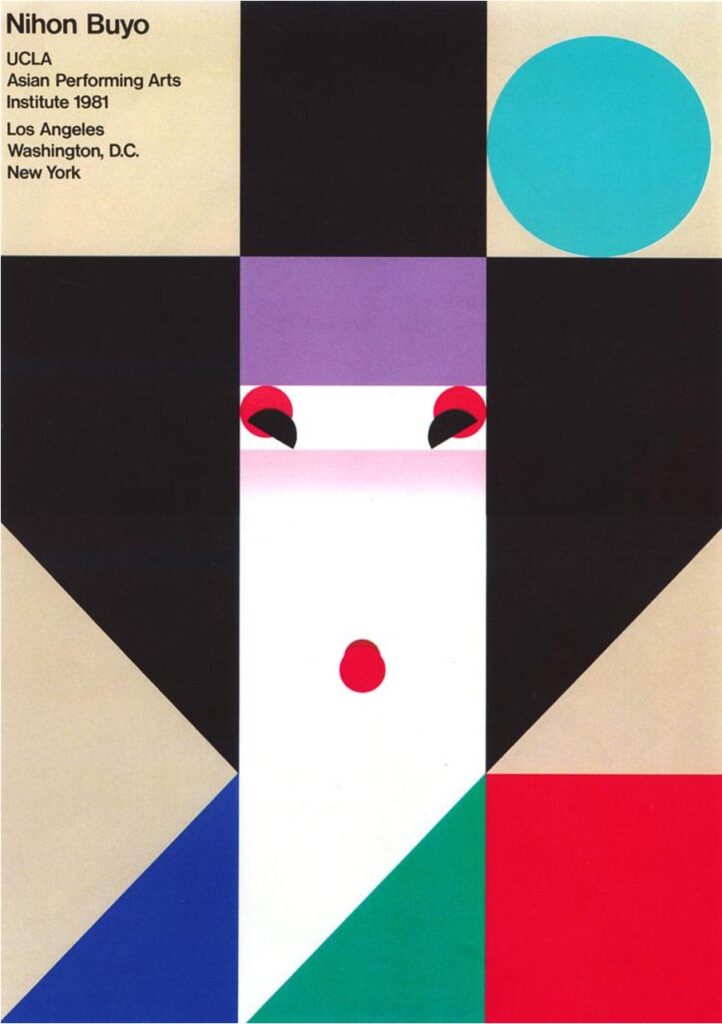
The Most Uploaded Item on the PGDA, Nihon Buyo, Poster Designed by Ikko Tanaka in 1981
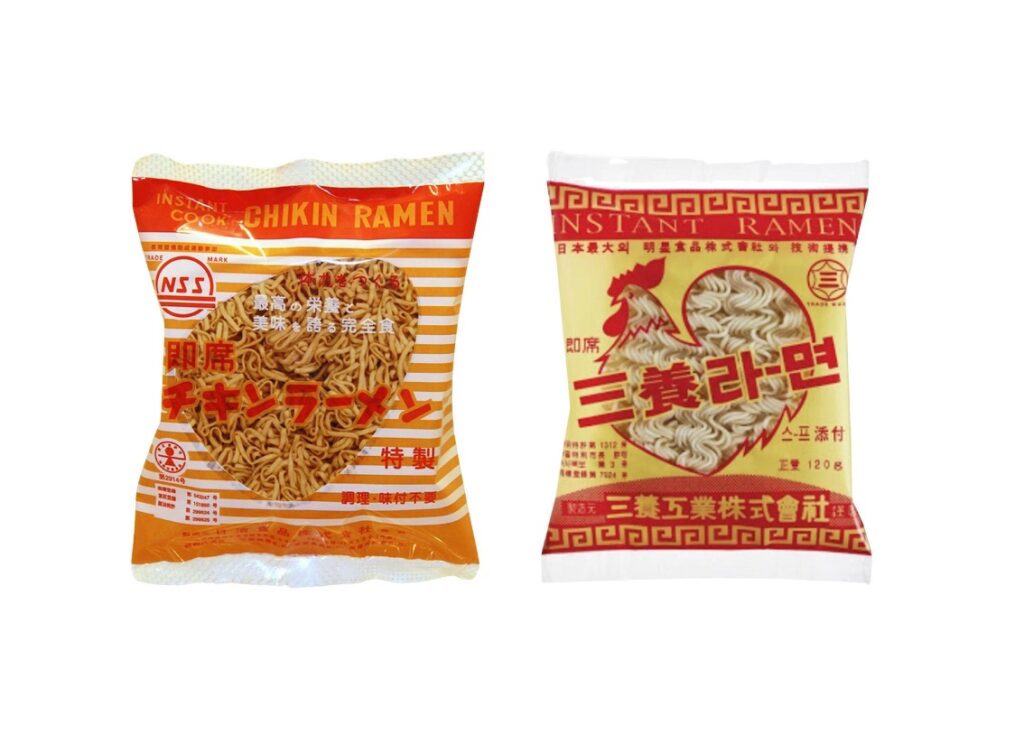
Two uploads in conversation with each other. Left, Japanese Instant Ramen Packaging from 1958. Right, Korean Ramen Packaging from 1963.
How does the team at the People’s Graphic Design Archive verify or contextualize submissions, especially when contributors may be documenting areas of design history outside the team’s expertise?
Horne: We don’t operate as gatekeepers, and that can feel unsatisfying as an answer. But we’re not trying to replicate traditional archives—we’re building an alternative.
Practically, there are some requirements: contributors must cite their sources, provide tags, and write a description. Every submission is reviewed to make sure those fields are complete. If something is unclear, we follow up with the contributor.
But we also push back on the idea of a single authority determining “truth” or “authenticity.” The model assumes that expertise exists within the community, and that it can surface through participation and dialogue.
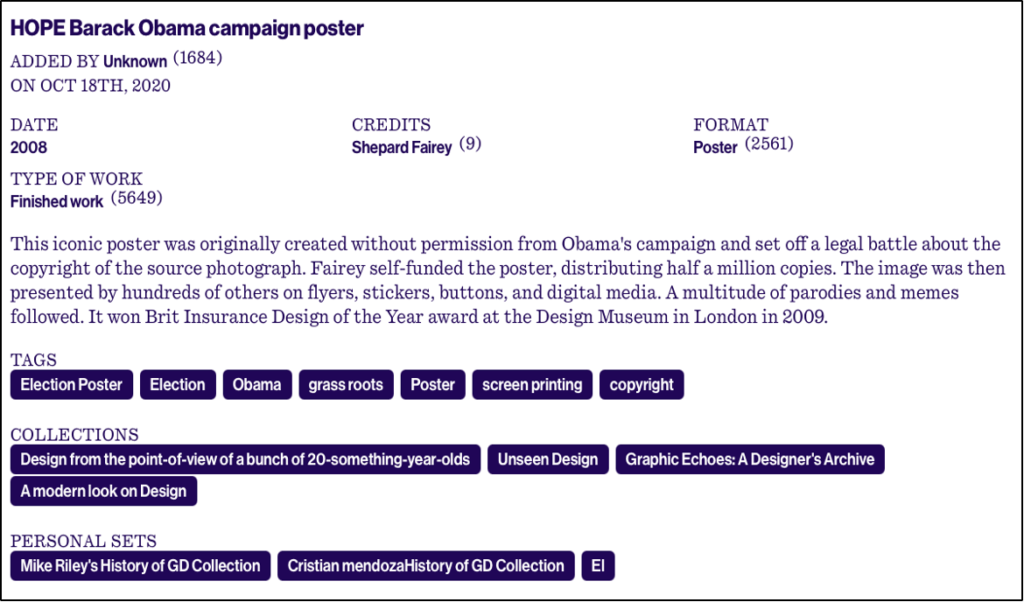
Example of submission to the People’s Graphic Design Archive, 2020. Photo: Screenshot from People’s Graphic Design Archive Website.
Continuing off of that, what kinds of labor—especially editorial, organizational, or community-based work—are required behind the scenes to sustain PGDA, and how do you think that labor should be recognized within the field of design?
Horne: I love that you’re asking about labor. The project is entirely volunteer-driven. Personally, I spend maybe 10 to 15 hours a week on it—moderating submissions, writing, meeting with the team. But it’s not “my” project. It’s important that it remains collective. That means the labor is shared, and sometimes messy—there’s disagreement, negotiation, a lot of coordination.
Recognition works differently here. It’s not about elevating one individual. It’s about contributing to a shared vision—changing how history gets written. That’s where the value lies.
At the same time, we do try to make labor visible. There are co-directors, a working board, an advisory board, developers, and collaborators. Even things like migrating servers or improving mobile functionality—work that’s often invisible—are essential. It’s a scrappy organization, but that’s also its strength.
The PGDA roadshows bring the archive into physical communities and invite people to share and document their own design materials in person. We’re curious how this shift from a digital archive to a participatory event changes the stories, memories, or interpretations that become a part of the archive?
Horne: To give you some idea of what the roadshows entail, we do both virtual and in-person events where we take a scanning station, and some material that we already have and want to archive, or we ask people to bring materials for archiving, live and in-person. Some of it is technical and a lot of it is guiding users through our user experience. Other parts are getting people to tell you great stories about their items, and hopefully empowering them to collect those stories. So that they go back into their communities and they think about the graphic ephemera and the pieces that represent their experiences as having real value and meaning.
For a recent roadshow, I brought tons of postcards from New York that I had collected over time. We asked folks to bring their own collection of greeting cards. Some of them had information on the back, as they had been stamped and used. The event became not just talking about the medium and the postcard itself, but also curiosity about who sent the card. The topic really shifted to the nature of correspondence in general. And the letters became discussion topics for the folks that were participating in the event. It becomes a place where people participating in the road shows can connect themselves in history. And really with the materiality, feel a continuity with items from the past. That represents our culture.
Many forms of graphic design—such as community posters, activist graphics, or everyday commercial work—often remain undocumented. How does PGDA address the challenge of preserving design labor that was never intended to be archived?
Horne: A lot of the focus is on what we call “legacy design”—work from earlier generations, especially forms of labor that were essential but often invisible, like lettering or photographic processes. There’s urgency here. Many of those practitioners are aging, and their stories risk being lost. So we’ve developed tools and workshops that help people document their own materials—often using just their phones. We also organize themed “add-a-thons,” where people collectively upload materials around topics like Indigenous design or environmental graphics. It’s about building a community effort to preserve what might otherwise disappear.
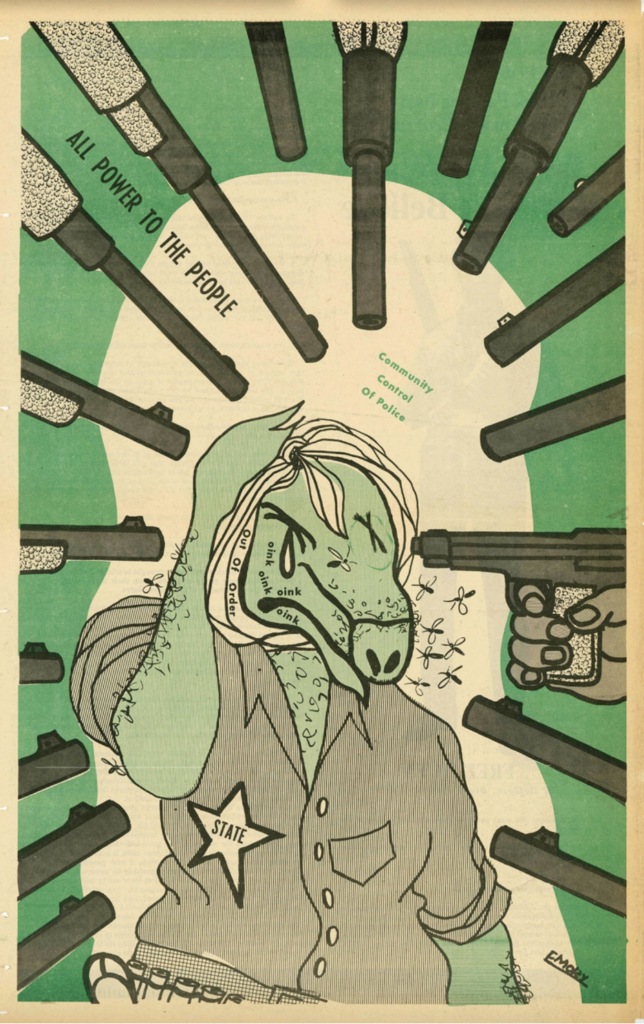
Emory Douglas, “All Power To The People”, Black Panther Newspaper, Vol 3, No.26. Newspaper print cover art.
In building the archive, have you found that some pieces are valuable specifically for political or social context they capture? How do you balance preserving controversial political graphics as history, while avoiding amplifying harmful messages?
Horne: We don’t exclude them. If something is problematic, contributors can flag it, and we have a takedown policy. But we believe those materials should be collected and discussed.
The challenge is context—especially online, where conversations can flatten quickly. It’s harder to hold the complexity of an object, its history, and its meanings over time. But avoiding difficult material isn’t the solution.
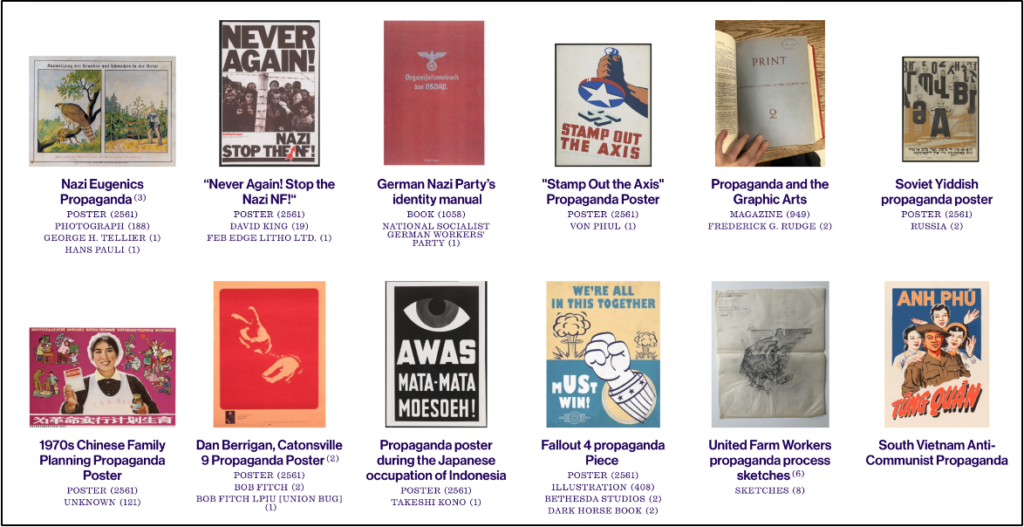
Examples of controversial material uploaded to the People’s Graphic Design Archive. Photo: Screenshot from People’s Graphic Design Archive website.
If new information emerges regarding an artifact that’s already been confirmed and submitted, does PDGA handle revisions or updates to that entry?
Horne: Contributors can edit their submissions at any time, and users can comment. Moderators also link related items and build connections. What’s interesting is that the archive reflects moments of collective attention. During the Olympics, we saw a surge of Olympic materials. During geopolitical conflicts, we see related content emerge. The act of collecting becomes part of the historical record. As for conflicting perspectives, we’ve found that the community tends to be generous—offering additional resources rather than competing narratives.
Because the archive depends on voluntary submissions, some designers and communities may still be underrepresented. What strategies does the PGDA use to encourage contributions from designers whose work has historically been overlooked or excluded from traditional archives?
Horne: Outreach is key. We participate in conferences, especially those centered on underrepresented communities, and invite contributions. We also run programs like the Summer Scholars initiative, where researchers build focused collections. For example, one scholar is working on Yugoslav feminist publishing—drawing from personal archives and research. Accessibility is another issue. Not everyone has the same tools or resources, so we’re constantly thinking about how to lower those barriers.
Most traditional archives are very curated selections of materials, whereas the PGDA goes against that notion to create an accessible history of Graphic Design. How did you approach designing a website that is easy to navigate and ensures all the content is visible for people to easily find?
Horne: It’s been iterative. We prototyped early on using tools like Notion and Figma, tested with users, and paid close attention to friction points—especially around metadata.
There’s always a balance: we want rich information, but too many requirements can discourage participation. We’ve also thought a lot about mobile use, camera integration, and multilingual design—making sure the platform works across different writing systems. We’re still refining things—collections, navigation, even something as simple as button placement. It’s ongoing work.
As PGDA develops, what would success mean to you? More entries, more people getting involved in the community, more use in classrooms, or a deeper change in how design history is taught and shared?
Horne: For me personally, it would be to push publishing. If we want different histories, we have to have different tools. So, I’m excited about the web as a medium of publishing, where we can publish original ideas that stand alongside traditional forms of publishing like textbooks and novels, things like that. It would be really cool if we start to see more experimental forms of publishing, small format, small publication runs; people that are using the web as a creative medium, expressing ideas for broad audiences. I’d love to see all of those tools of expression, in an era of AI and in an era of false narratives, to become kind of contested and more experimental. I also love building community around design history. Whenever I’ve had the chance to choose two majors, I do art history and graphic design, so I really love when we can have interdisciplinary conversations and have crossover between fields, and I feel like this project answers that, in a way, as well. I’m excited about that as a benchmark for success.
What are some of the long-term goals for expanding the archive and its interface?
Horne: We’ve built a substantial collection—around 15,000 items. Now the question is: what do we do with it? How do we interpret it? We want to create better tools for integrating writing and images, and for supporting emerging scholars. There’s a real need for new forms of design history writing. Ultimately, we hope the next generation takes this further—developing new models for archives, new ways of thinking about history, and new spaces for critical dialogue.
As the PGDA seeks to preserve and recognize graphic design and culture’s expansive and inclusive history through a digital archive, how does the archive’s rule that material must be older than ten years to be submitted enforce these goals or weaken them?
Horne: It allows some distance—time for interpretation. It also prevents the archive from becoming a portfolio platform or a place to freeze items into history that are otherwise still very much alive. But it has limitations. It excludes important contemporary movements—Me Too, Black Lives Matter, and others. So we’ve created a “future history” category, where materials can be collected now but published later. I have a complicated relationship with the rule. It helps maintain an archival perspective, but it also reminds us that history is always unfolding.
The People’s Graphic Design Archive invites not only viewing, but participation. As this conversation makes clear, its value lies in the collective—an evolving record shaped by those who choose to contribute their materials, knowledge, and perspectives. For VoCA readers, whether as artists, historians, designers, or collectors of everyday ephemera, PGDA offers a platform to expand what counts as design history and who gets to author it.
Explore the archive and consider contributing your own materials at People’s Graphic Design Archive: https://www.peoplesgdarchive.org/.